

As the Editorial Board, we hereby announce that the CFPs for the forthcoming issues of our journal have been published, and we are looking forward to receiving your submissions. We are accepting articles in Polish, Italian, and English. We kindly invite you to join our project and contribute to the issues listed below.
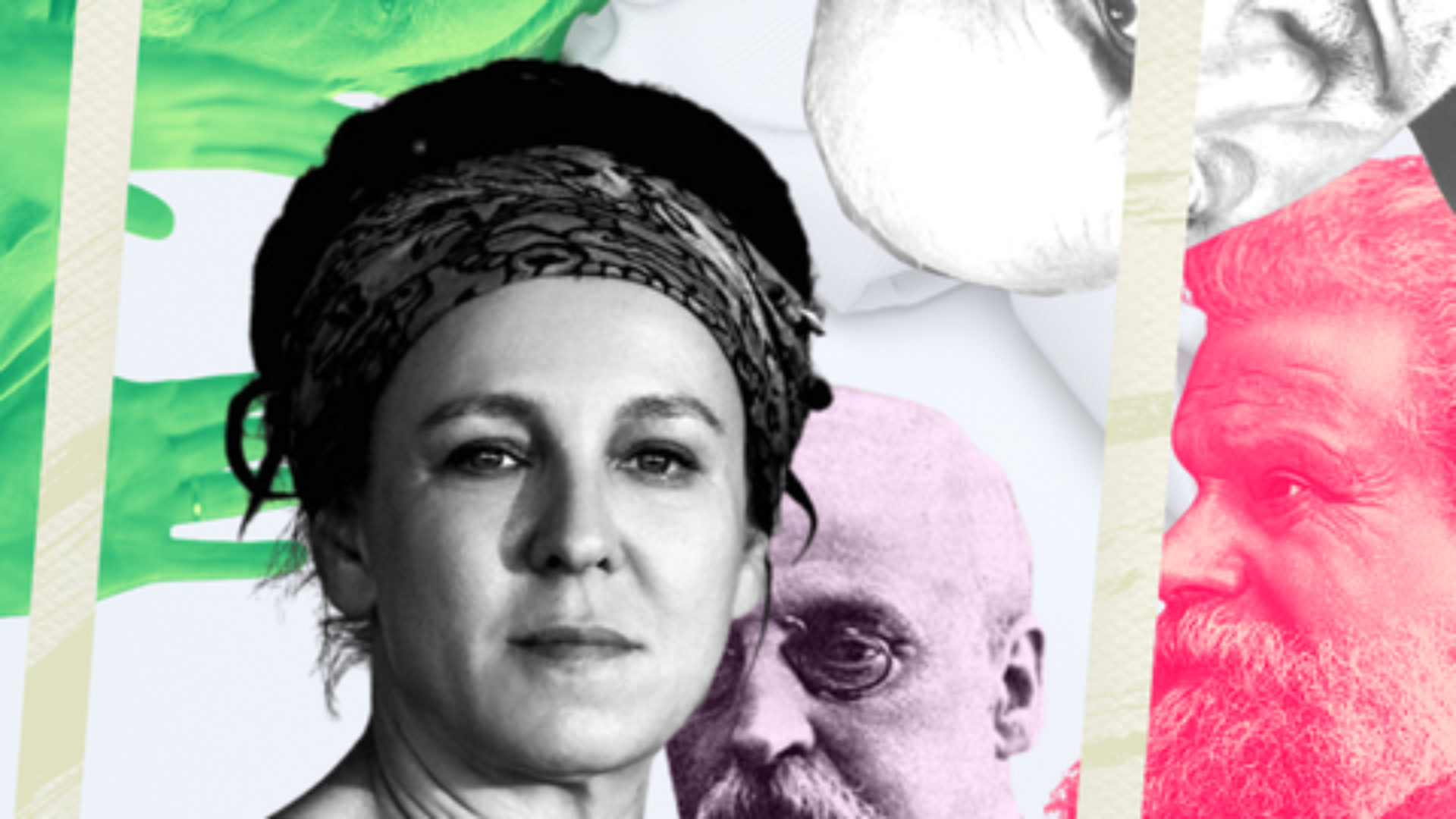
Olga Tokarczuk.
Volume of Day / Volume of Night
„Fabrica Litterarum Polono-Italica” 2027, no. 1-2 (13-14)
Martin Heidegger claims that “language is a house of being,” and we – as literary scholars – widely accept it as a fact. If he is indeed right, literature is one of the most splendid houses that can be built for existence. Moreover, it is a solid house; even though each human being speaks, “what remains the poets found” (Friedrich Hölderlin). It is a vast house, whose builders still search for “a more capacious form” (Czesław Miłosz): a form that would store reality that has not been yet covered. Finally, it is a hospitable house; the house founded by great writers is a safe haven for readers, who travel across times and cultures and carry experiences and hopes, which might be foreign to writers and their works. On the doorstep, the reader is welcome with sweet words, nevertheless:
“Mrs. Dalloway said she would buy the flowers herself.”
“Alice was beginning to get very tired of sitting by her sister on the bank.”
“Happy families are all alike; every unhappy family is unhappy in its own way.”
“In the midway of this our mortal life, I found me in a gloomy wood, astray, Gone from the path direct […].”
For three decades now, Olga Tokarczuk has been building a literary house, hosting readers from all around the world. What kind of house does she build? One where we are together even though we would like to be separated with floors and walls. It is pointless, nonetheless; as Tokarczuk claims, the being of the world and the being of the human are one. Her literary output is a simulation where we learn how to play a game of regaining the world as the planet of all living creatures. And so, her fiction is full of women, men, objects, animals, plants, the living, and the dead; these creatures and beings affect each other. It is a shared house yet not a unified one. It hosts languages, stories, songs, and images. Its walls, just as the faces of their inhabitants, are affected by the blinding light of science, the darkness of myths and fairy tales, and the faint flame of intuitions and prophecies of the unknowable future. This house-world has no culture at its centre; each of its inhabitants is from “somewhere,” has their “home,” and a story to tell. There is neither an omniscient narrator nor a protagonist. Each person has their tale. The world swells and cracks due to the abundance of stories, which cannot be contained in Chmielowski’s encyclopaedia nor in Wikipedia. Only the adjustable walls of literature might host every word and every story. I do believe that our readings of Tokarczuk’s works, readings of “day” and readings of “night,” might also find their places in the constantly haunted house of literature, which she tirelessly builds.
Prof. Ryszard Koziołek
Articles should be submitted through the OJS system by 15 September 2024. Should you have any questions regarding the submission procedure, please do not hesitate to reach us at: fabricalitterarum@gmail.com